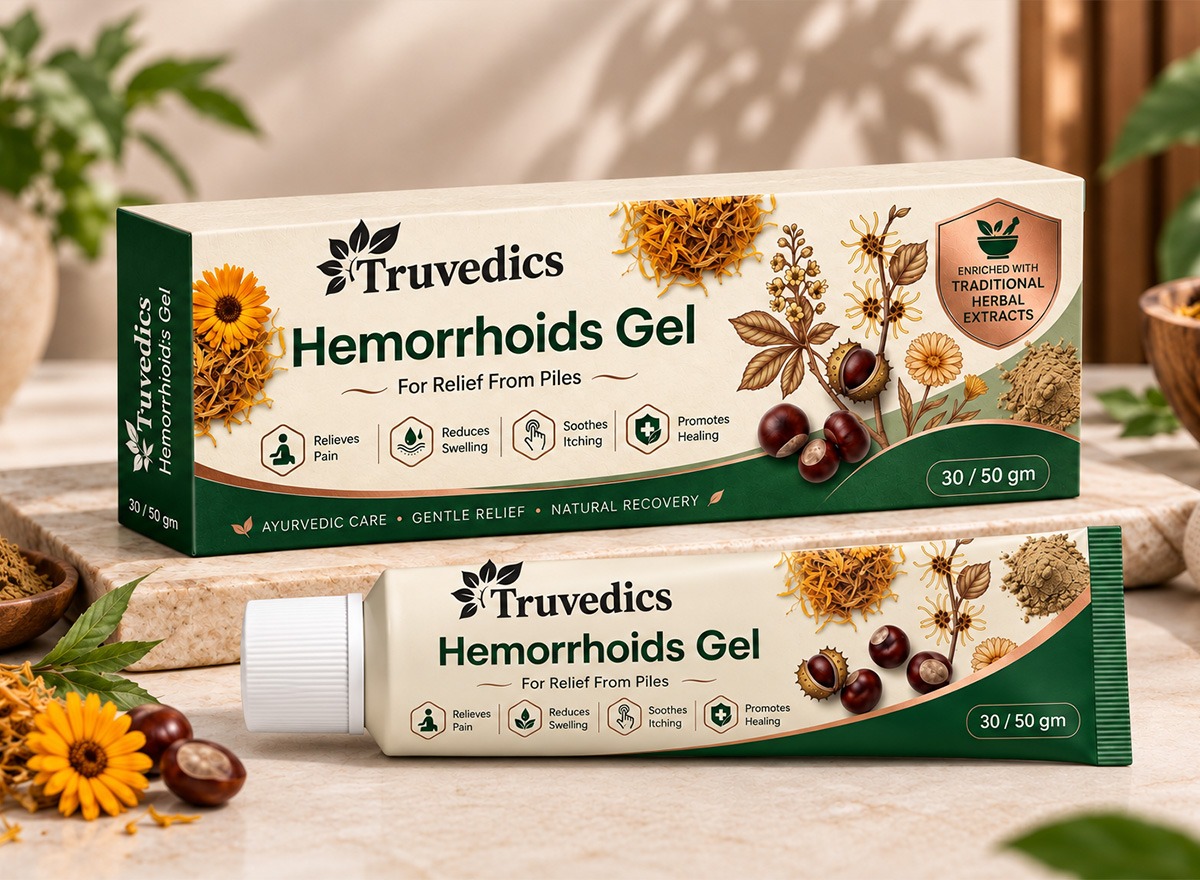
Hemorrhoids Gel
Hemorrhoids are swollen or enlarged blood vessels and surrounding tissues in the lower rectum or anus. They are commonly classified into two main types: internal hemorrhoids and external hemorrhoids.
Hemorrhoids, commonly known as piles, are a common condition that can affect people of different age groups. Discomfort around the anal and rectal area, itching, irritation, swelling, tenderness, and pain can make everyday activities uncomfortable. Sitting for long periods, using the washroom, travelling, working at a desk, or maintaining an active routine may become difficult when hemorrhoid-related discomfort occurs.
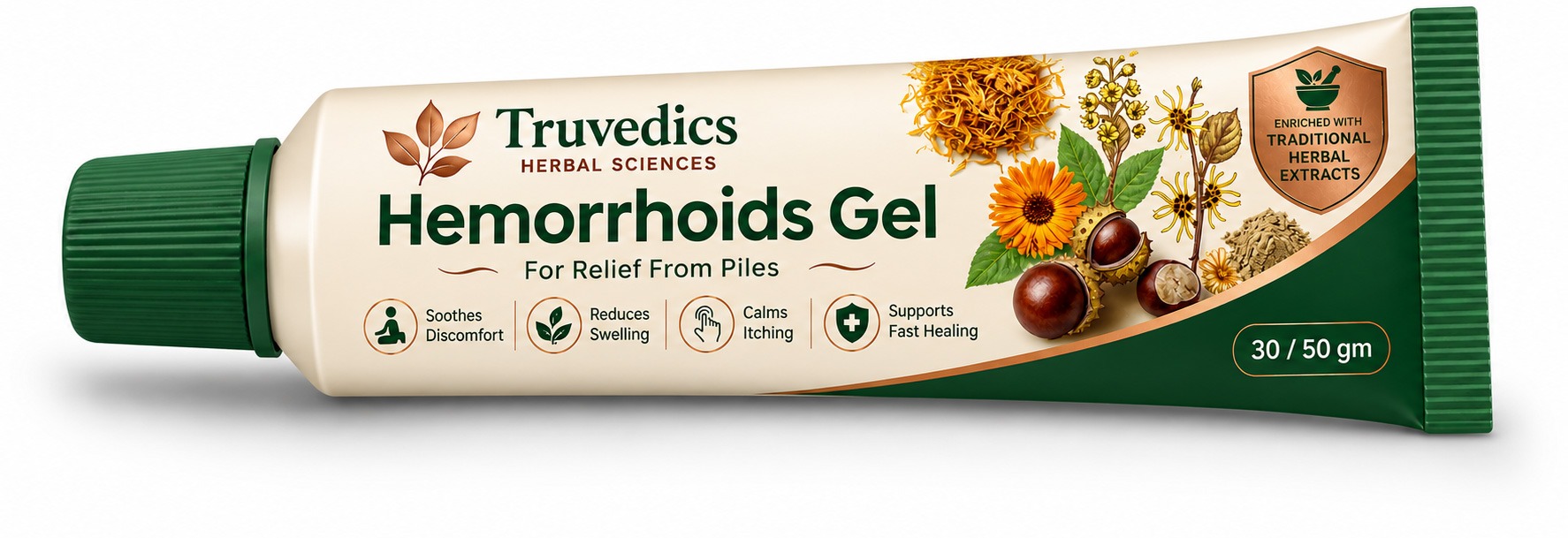
Truvedics Hemorrhoids Gel 30 gm / 50 gm is designed for topical care of the area affected by hemorrhoid-related discomfort. Its gel format makes it convenient to apply as part of a regular personal-care routine. The product can be incorporated into a suitable hemorrhoid-care regimen while users continue to follow healthy bowel habits and other recommended measures.
Key Product Highlights
- Available in 30 gm and 50 gm pack sizes
- Designed for topical hemorrhoid care
- Convenient gel-based application
- Suitable for incorporating into a regular personal-care routine
- Focused on supporting comfort around the hemorrhoid-affected area
- Convenient format for home use
- Can complement healthy lifestyle and bowel-care practices
Related products
Understanding Hemorrhoids
Hemorrhoids are swollen or enlarged blood vessels and surrounding tissues in the lower rectum or anus. They are commonly classified into two main types: internal hemorrhoids and external hemorrhoids.
Internal hemorrhoids develop inside the rectum and may not always cause noticeable discomfort. In some cases, they may be associated with bleeding during bowel movements. External hemorrhoids develop beneath the skin around the anus and may cause symptoms such as irritation, itching, swelling, tenderness, or discomfort.
Symptoms can vary from person to person. Some individuals may experience occasional irritation, while others may notice recurring discomfort, especially during or after bowel movements.
Understanding the condition is an important first step toward better care. Maintaining healthy bowel habits, avoiding unnecessary straining, staying hydrated, consuming adequate dietary fibre, and keeping the affected area clean are commonly recommended measures for supporting hemorrhoid care.
Why Hemorrhoid Care Matters
Hemorrhoid symptoms can interfere with everyday comfort. Even mild itching or irritation can become distracting when it continues throughout the day. More noticeable discomfort may make sitting, walking, exercising, travelling, or working difficult.
Ignoring recurring symptoms is not always advisable. Simple lifestyle measures can play an important role in supporting bowel health and reducing factors that may contribute to hemorrhoid discomfort. Alongside these measures, topical care can be used according to the product directions and professional advice when appropriate.
Truvedics Hemorrhoids Gel offers a convenient way to include topical care in an overall hemorrhoid-management routine.
Hemorrhoids may be associated with several factors rather than one single cause. Common contributing factors include:
1. Constipation
Hard stools and constipation can make bowel movements difficult. Repeated straining may place additional pressure on the blood vessels and tissues around the rectal area.
2. Straining During Bowel Movements
Spending excessive time on the toilet or repeatedly straining can contribute to pressure in the lower rectal region. Avoiding unnecessary straining is an important part of maintaining healthy bowel habits.
3. Low-Fibre Diet
A diet that lacks adequate fibre may contribute to hard or difficult-to-pass stools. Fruits, vegetables, whole grains, legumes, and other fibre-containing foods can support regular bowel movements.
4. Prolonged Sitting
Sitting for extended periods, particularly without regular movement, may contribute to discomfort and pressure around the lower body. Taking appropriate movement breaks can support an active routine.
5. Pregnancy
Pregnancy can increase pressure on the pelvic and rectal areas. Hormonal changes and constipation during pregnancy may also contribute to hemorrhoid symptoms.
6. Heavy Lifting and Physical Strain
Repeated heavy lifting or activities that involve significant straining may increase pressure in the abdominal and pelvic regions.
Why Choose Truvedics Hemorrhoids Gel?
When hemorrhoid-related discomfort affects your everyday routine, convenient topical care can be an important part of personal care. Truvedics Hemorrhoids Gel 30 gm / 50 gm provides a practical gel format designed for topical hemorrhoid care.
Its convenient pack sizes make it easy to select an option suited to your routine, while the topical format allows targeted application according to the product directions.
For best results from an overall care perspective, topical care should be combined with healthy bowel habits and appropriate lifestyle practices. Users should always follow the instructions supplied with the product and consult a healthcare professional when symptoms require medical evaluation.
When Should You Consult a Doctor?
Although hemorrhoids are common, not every symptom involving the rectal or anal area should automatically be assumed to be hemorrhoids.
Medical advice is particularly important when symptoms are severe, persistent, worsening, or repeatedly returning. You should also seek professional evaluation for significant or unexplained rectal bleeding, severe pain, dizziness, weakness, fever, a rapidly developing lump, or changes in bowel habits that concern you.
Rectal bleeding can have several causes, so it should not always be attributed to piles without appropriate evaluation.
Professional guidance can help identify the underlying cause and determine the most appropriate treatment or care plan.
Frequently Asked Questions
What is Truvedics Hemorrhoids Gel?
Truvedics Hemorrhoids Gel is a topical gel intended for hemorrhoid-related personal care. It is available in 30 gm and 50 gm pack sizes and can be used according to the directions provided with the product.
What are hemorrhoids?
Hemorrhoids, commonly called piles, are swollen veins and surrounding tissues in the lower rectum or around the anus. They can be internal or external and may cause symptoms such as itching, irritation, swelling, discomfort, tenderness, or bleeding.
What is the difference between internal and external hemorrhoids?
Internal hemorrhoids develop inside the rectum, while external hemorrhoids develop beneath the skin around the anus. Their symptoms can differ, and a healthcare professional can help determine the type when necessary.
Can constipation contribute to hemorrhoids?
Constipation can contribute to hemorrhoid problems because hard stools and straining during bowel movements can increase pressure around the rectal area. Maintaining adequate fibre and fluid intake can support healthier bowel movements.
How should Truvedics Hemorrhoids Gel be used?
Use the gel strictly according to the instructions provided on the product packaging. Proper hygiene and careful application are important when using any topical product around the anal area.
Can lifestyle habits support hemorrhoid care?
Yes. Healthy bowel habits can be an important part of hemorrhoid care. Staying hydrated, consuming adequate dietary fibre, avoiding unnecessary straining, maintaining physical activity, and avoiding prolonged toilet sitting can support bowel health.
Should persistent hemorrhoid symptoms be checked by a doctor?
Yes. Persistent, severe, worsening, or recurrent symptoms should be evaluated by a healthcare professional. Significant or unexplained rectal bleeding should also receive appropriate medical attention.
Can everyone use a hemorrhoid gel?
Individual suitability can vary. Follow the product label and consult a qualified healthcare professional if you have concerns about using a topical hemorrhoid product, particularly during pregnancy, breastfeeding, or when managing other medical conditions or medications.